Driving in Saudi Arabia: A Visitor’s Guide to the Roads
Superb highways, serious distances, camera-enforced speeds and the occasional camel. Licences, renting, desert rules and city traffic - what a visiting driver actually needs to know.
- Visitors drive on many national licences; an IDP alongside removes rental-desk arguments
- Speed limits are camera-enforced everywhere - fines reach you via the rental company
- Camels on desert highways at dawn and dusk are the serious road risk
- Riyadh to Jeddah is nearly 950 km - fly it or split it, don’t sprint it
Can you drive at all?
Yes. Visitors drive on many national licences for short stays, and an International Driving Permit carried alongside your home licence is the belt-and-braces answer - rental companies may ask for it, and it removes every argument at the desk. Saudi drives on the right, and women drive on exactly the same terms as men.
Renting needs your passport, your visa, your licence and a payment card. Drivers usually need to be at least 21, and 25 for larger or premium cars; book ahead in Ramadan and the Umrah peaks, when fleets thin out.
The roads themselves
Intercity Saudi Arabia is a driver's pleasure: multi-lane highways in excellent condition stitch the country together, fuel is plentiful and cheap by most visitors' standards, and distances are the real challenge - Riyadh to Jeddah is nearly 950 kilometres, a full day's drive that most visitors should fly or split.
Speed limits are enforced by cameras everywhere, and fines land with the rental company, who will pass them to your card with an admin fee. Cruise control is not a luxury here; it is how you keep both the limit and your deposit.
Desert rules
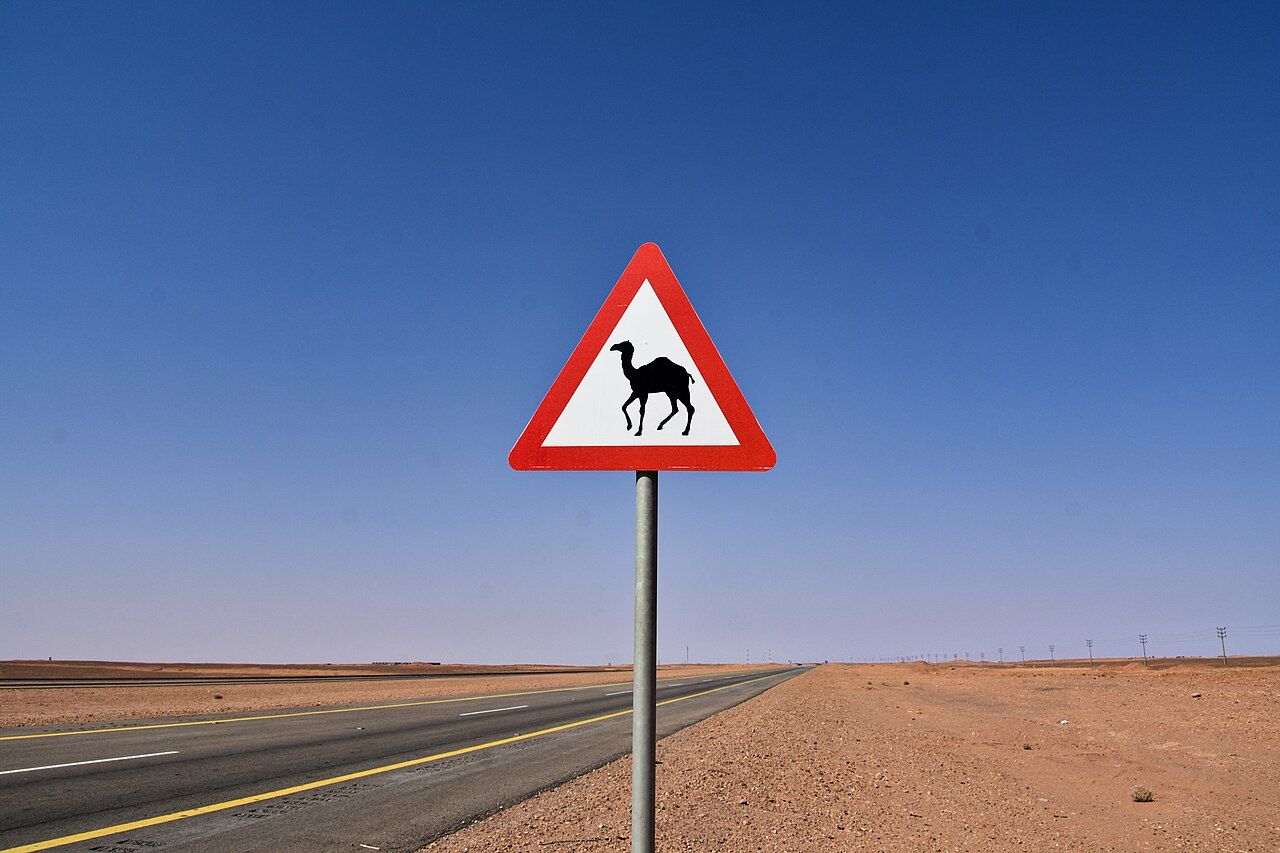
The photograph above is not a joke sign. Camels wander unfenced desert highways, especially at dawn and dusk, and a collision with a 600-kilo animal is the single most serious road risk in the Kingdom. Slow down when you see the warning triangles, treat dusk driving on rural roads with respect, and never swerve violently at highway speed.
Carry water far beyond what you think you need, keep the tank above half outside the cities, tell someone your route on long desert legs, and stay on the tarmac unless you are in a proper 4x4 with company and experience - sand forgives nothing and phone signal fades fast.
In the cities
Riyadh traffic is the country's real driving test: dense, fast and assertive at peak hours, with the metro now taking some of the strain. Jeddah is more forgiving; both cities reward patience, early lane choices and a navigation app with live traffic. Parking in central areas is mostly paid and app-based.
One calendar note: Friday is the quiet morning and the busy evening. Plan intercity departures early on Fridays and you will have the highway almost to yourself.
Common questions
Can tourists rent a car in Saudi Arabia?
Yes - with your passport, visa, driving licence (an International Driving Permit helps) and a payment card. Minimum age is usually 21, and 25 for larger cars.
Is it safe to drive between cities?
The highways are excellent. The real risks are distance, fatigue and camels at dawn and dusk - plan fuel and rest stops, keep the tank above half, and slow down at camel-warning signs.
Can women rent and drive cars?
Yes, on exactly the same terms as men. Women have held Saudi licences since 2018.

Ready when you are
Check your eligibility in a minute, then apply online - a specialist reviews your documents before anything is submitted, and your total is confirmed in writing before you pay.