Visiting Jeddah: Gateway to the Red Sea
Coral-stone tower houses, a fountain taller than most towers, and seafood worth the flight alone. Two or three days in Saudi Arabia's most easygoing city.
- Al-Balad's houses are built from coral stone with wooden rawashin balconies
- The King Fahd Fountain is the tallest of its kind in the world at over 300m
- The Haramain train reaches Makkah in about an hour from Jeddah airport
- Jeddah has been Makkah's port and pilgrim gateway for over 1,000 years
Why Jeddah feels different
Jeddah has been a port for as long as there has been trade on the Red Sea, and the pilgrim gateway for Makkah for over a thousand years. That history made it the Kingdom's most outward-looking city - merchant families from across the Indian Ocean, a famous art scene, and a local saying that Jeddah is 'different'. The Corniche runs for miles along the sea, the old town is a UNESCO site, and the pace is set by the water. If Riyadh is the Kingdom's head, Jeddah is its smile.
Al-Balad: the old town
Give Al-Balad a slow morning or a golden late afternoon. Its tower houses were built from Red Sea coral stone and teak, fronted with rawashin - the enclosed wooden lattice balconies that catch the sea breeze and shade the streets. Naseef House, the old merchant mansion turned museum, anchors the visit; around it, the souqs sell everything from oud and textiles to gold, and the lanes keep revealing carved doors. Restoration is ongoing and serious - parts feel like a building site in the best sense, a heritage district being handed back to the city.
The Corniche and the sea
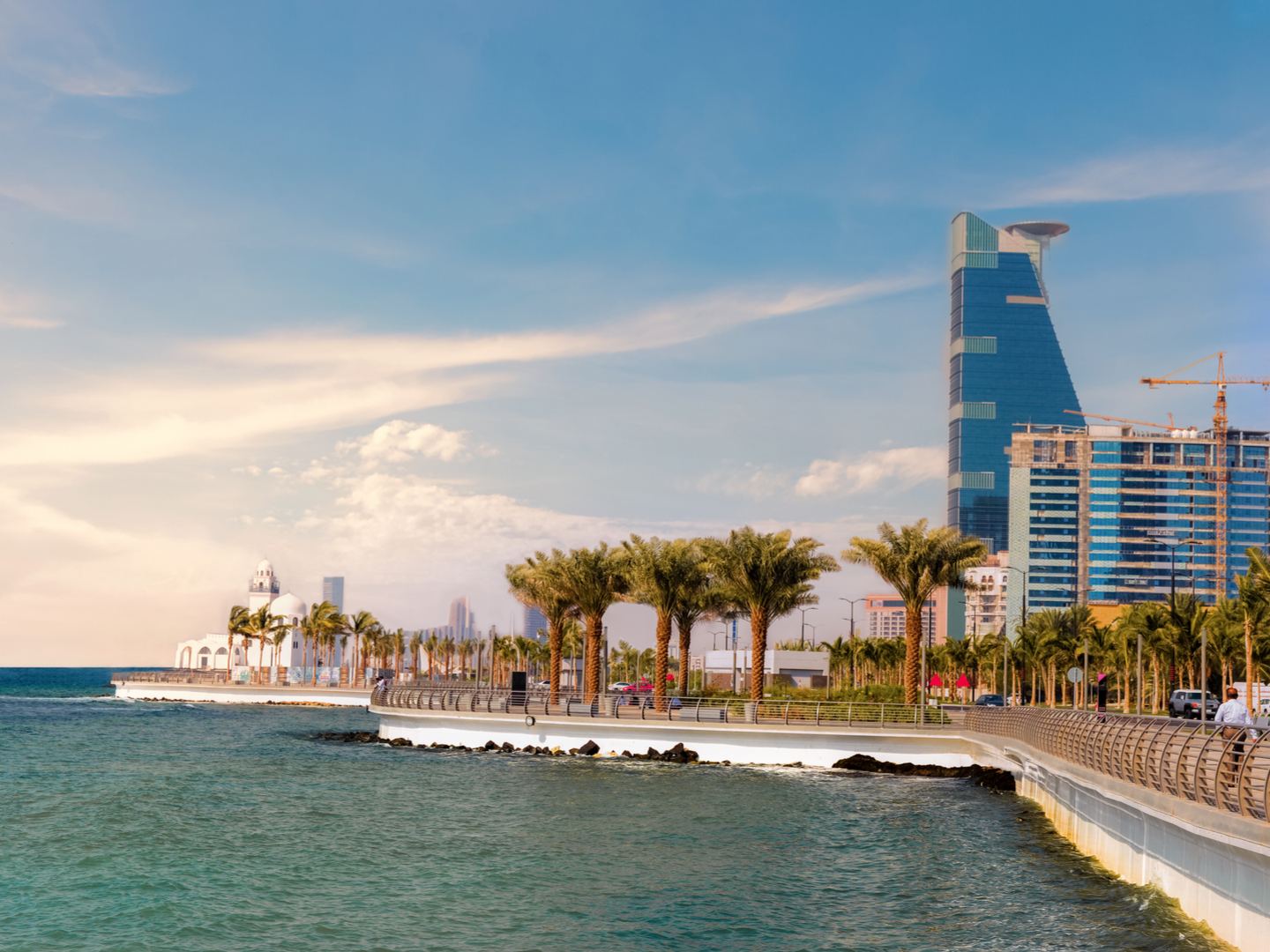
The Corniche is Jeddah's living room: sculpture-dotted promenades (the city has collected major open-air art for decades), the King Fahd Fountain - at over 300 metres, the tallest of its kind in the world, lit at night - and families out until late. Al Rahma Mosque, the 'floating mosque', sits on pillars over the water at high tide. For the sea itself, the private beach clubs north in Obhur Al Janoubia are where Jeddah swims, and dive boats run to reefs that justify the Red Sea's reputation all on their own.
Eat like it matters
Jeddah's table is Hijazi and proud: sayadiyah, the spiced fisherman's rice with fried fish; mutabbaq folded pancakes from a Balad stall; tamees bread with foul for breakfast; and a seafood scene - restaurants where you point at the catch - that the rest of the country envies. Finish with the city's cafe culture along Tahlia Street or in the Assila district. Nobody leaves Jeddah underfed; plan your appetite like an itinerary item.
Practical notes
King Abdulaziz International Airport's Terminal 1 is a destination in itself (the aquarium alone), with the Haramain high-speed train connecting directly to Makkah in about an hour and Madinah in under two. Muslim travellers heading for Umrah often overnight in Jeddah either side of the rites. Stay near the Corniche for the classic experience or in Al Hamra for business polish. Two days cover the city; three let the sea set the schedule, which is rather the point.
Common questions
Can I swim in Jeddah?
Yes - at the private beach clubs of Obhur Al Janoubia north of the centre, which have the facilities and the reefs nearby. Public Corniche areas are for promenading rather than swimming.
Is Jeddah a good base for Umrah?
Very. Many pilgrims overnight in Jeddah on arrival or departure, and the airport train makes Makkah about an hour away. Madinah is under two hours by the same line.
What should I eat first?
Sayadiyah - the Hijazi spiced rice with fried fish - then a mutabbaq from an Al-Balad stall for the street-level version of the city's cooking.

Ready when you are
Check your eligibility in a minute, then apply online - a specialist reviews your documents before anything is submitted, and your total is confirmed in writing before you pay.